Can You Have PCOS Even If Your Periods Are Regular? Signs Women Often Miss
Regular periods don't rule out PCOS. Learn the signs women often miss, why a monthly cycle doesn't confirm ovulation, and how PCOS is diagnosed.
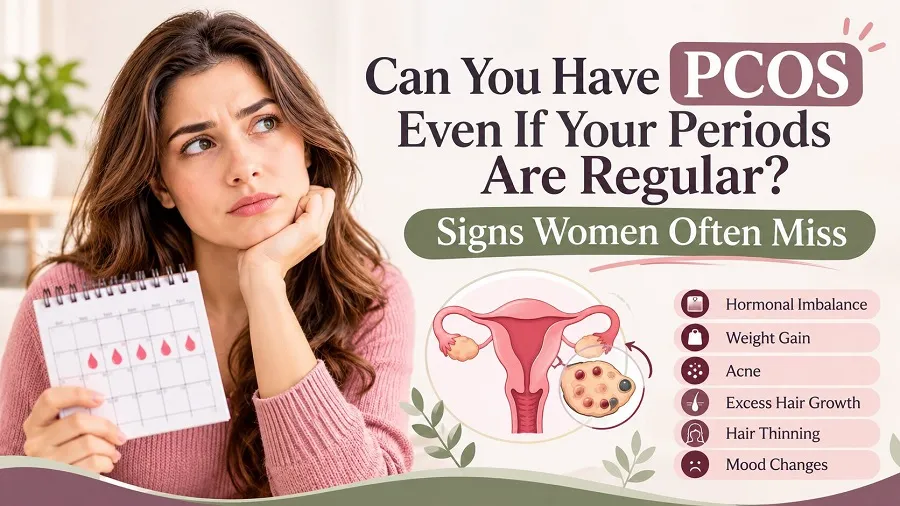
If your periods arrive every month, you might assume your hormones are working normally. However, regular menstrual cycles do not always mean you are ovulating consistently or that your hormone levels are balanced. Some women with polycystic ovary syndrome (PCOS) have predictable periods but experience other symptoms that are easy to overlook.
PCOS is a hormonal and metabolic condition that can affect ovulation, skin, hair growth, and reproductive health. While irregular periods are a common symptom, they are not required in every case. Recognizing less obvious signs can help you understand when a closer evaluation may be worthwhile.
Can You Have PCOS With Regular Periods?
Yes. It is possible to have PCOS even if your menstrual cycle appears regular. In adults, PCOS is generally diagnosed when at least two of three features are present, after other possible causes have been excluded:
- Clinical or blood-test evidence of elevated androgens, often called male-type hormones.
- Ovulatory dysfunction, which means the ovaries do not release an egg consistently.
- Polycystic ovarian morphology identified through an ultrasound or, in appropriate adults, an AMH assessment.
This means a woman can have regular periods alongside signs of elevated androgens and polycystic ovarian morphology. Together, these findings may meet the diagnostic criteria for PCOS.
There is another important detail: bleeding every month does not always confirm that ovulation has occurred. Some women experience regular-looking cycles but do not release an egg consistently. A healthcare provider may recommend a progesterone blood test at an appropriate time in the cycle to check for ovulation when necessary.
Signs of PCOS Women Often Miss
Irregular periods may be the symptom most people associate with PCOS, but several other signs can appear even when cycles seem predictable.
Persistent Acne or Oily Skin
Occasional breakouts are common, but persistent acne may sometimes indicate a hormonal issue. Women with PCOS can experience acne around the jawline, chin, chest, or back, particularly when androgen levels are elevated.
Adult acne that continues despite typical skincare treatments may deserve attention, especially when accompanied by other symptoms. However, acne alone does not confirm PCOS.
Unwanted Facial or Body Hair
Excess hair growth, medically called hirsutism, is another common sign of higher androgen activity.
You might notice coarse, dark hair developing around the chin, upper lip, chest, abdomen, or other areas where women typically have less visible hair. Some women gradually begin removing facial hair more frequently without realizing that the change could be related to their hormones.
Thinning Hair on the Scalp
While some women notice unwanted hair growth, others experience the opposite problem. Elevated androgen activity can contribute to thinning hair, particularly around the crown or along the parting.
This pattern may develop gradually, making it easy to attribute the change to stress, aging, or styling habits. If scalp thinning occurs alongside persistent acne or increased facial hair, discussing possible hormonal causes with a healthcare provider may be helpful.
Weight Changes and Difficulty Managing Weight
Some women with PCOS experience weight gain or find it harder to manage their weight than before. Insulin resistance can play a role in this pattern because the body does not respond to insulin as effectively as it should.
However, PCOS does not affect every woman in the same way. Women at a lower or average body weight can also have the condition. Weight alone cannot confirm or rule out PCOS.
Darkened Skin and Skin Tags
A less recognized sign is acanthosis nigricans, which causes darker, thicker, velvety-looking skin. It commonly appears around the neck, underarms, or groin.
This skin change can be associated with insulin resistance. Some women also develop small skin tags around the neck or underarms.
These symptoms are not exclusive to PCOS, but they may be worth mentioning during a medical evaluation, particularly when other hormonal signs are present.
Why Regular Periods Do Not Always Confirm Ovulation
A menstrual cycle is not necessarily proof that an egg has been released. Although regular cycles often suggest that ovulation is occurring, some women experience ovulatory dysfunction despite predictable bleeding.
This distinction becomes especially important when trying to conceive. Without consistent ovulation, identifying the fertile window can be difficult, even when periods arrive on schedule.
Tracking cycle dates can provide useful information, but it may not tell the whole story. If you are unsure whether ovulation is occurring, learning how to track ovulation can help you understand the different methods and their limitations.
How Is PCOS Diagnosed If Your Periods Are Regular?
There is no single test that confirms PCOS. A diagnosis usually involves reviewing symptoms, medical history, examination findings, and appropriate investigations.
Depending on your symptoms, a fertility or gynecology specialist may recommend:
- Hormone blood tests: These may assess testosterone and other hormones to look for evidence of elevated androgen levels.
- Ovulation assessment: A progesterone test may help establish whether ovulation has occurred.
- Pelvic ultrasound: Imaging can assess ovarian appearance and identify polycystic ovarian morphology.
- Additional blood tests: Thyroid function and prolactin may be checked to investigate other conditions that can cause similar symptoms.
- Metabolic assessment: Depending on individual risk factors, testing may evaluate blood glucose, diabetes risk, and cholesterol levels.
For adults, an ultrasound or AMH assessment may help establish the ovarian morphology criterion when needed. They are not automatically required in every case, and AMH should not be used as a standalone PCOS diagnostic test.
Because several conditions can cause similar symptoms, test results need to be interpreted together rather than individually. If you want to understand how different hormone measurements fit into a fertility evaluation, our guide to understanding fertility clinic lab results provides additional context.
When Should You Seek a PCOS Evaluation?
Consider discussing your symptoms with a healthcare provider if you experience persistent acne, increased facial hair, scalp thinning, unexplained skin changes, or concerns about ovulation.
An evaluation may also be worthwhile if you are trying to conceive and have difficulty identifying your fertile window, even though your periods appear regular.
PCOS can affect reproductive and metabolic health, so assessment is not only about menstrual patterns. A provider may also review blood glucose regulation, cholesterol levels, and other factors based on your individual health history.
Her Serenity offers PCOS assessment and care, including cycle evaluation, hormone testing, ultrasound assessment, and fertility-focused planning. This can help women understand their symptoms and discuss appropriate next steps.
Understanding PCOS Beyond Your Menstrual Cycle
Having regular periods does not automatically rule out PCOS. Hormonal symptoms such as persistent acne, unwanted facial hair, scalp thinning, and signs of insulin resistance may still deserve attention, even when your cycle appears predictable.
At the same time, experiencing one or two of these symptoms does not necessarily mean you have PCOS. An accurate diagnosis requires a broader assessment and consideration of other possible causes.
If you have noticed changes in your skin, hair, weight, or fertility, discussing them with a qualified specialist can help clarify what is happening. At Her Serenity, an individualized PCOS evaluation can help you understand your hormone health, assess ovulation, and explore care options based on your symptoms and goals.