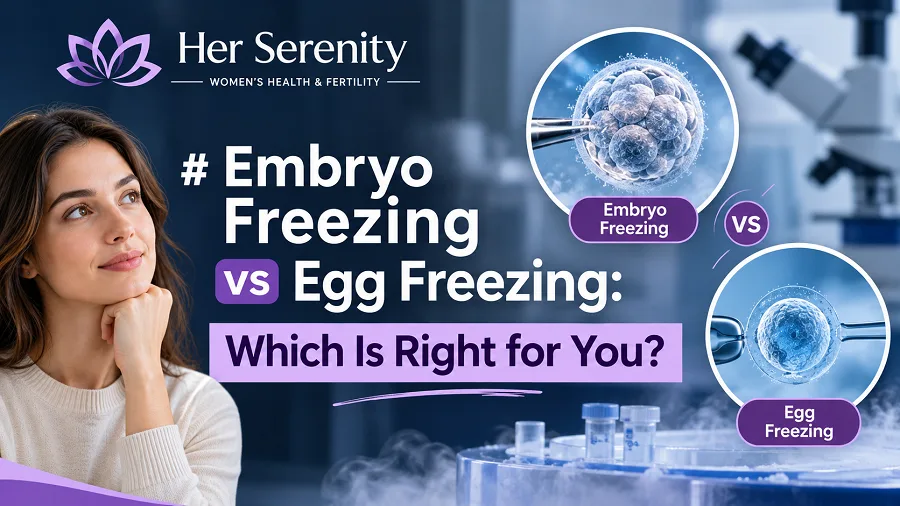
Embryo Freezing vs Egg Freezing: Which Is Right for You?
Compare egg freezing and embryo freezing: how each works, success rates, costs, consent, and how to decide which fertility preservation option fits your goals.
Planning for a future family doesn't always mean you're ready to have a baby today. Both egg freezing and embryo freezing allow you to preserve reproductive options, but they work differently.
Egg freezing may be better if you want flexibility in choosing a sperm source later. Embryo freezing may suit you if you're ready to fertilize your eggs now using partner or donor sperm. Neither guarantees pregnancy, and the right choice depends on your age, fertility health, relationships, and family-building goals.
Understanding these differences can help you approach your fertility preservation decision with greater confidence.
What Is Egg Freezing?
Egg freezing, medically called oocyte cryopreservation, involves collecting mature eggs from the ovaries and preserving them without fertilization.
The process begins with hormone medications that stimulate the ovaries to develop multiple eggs. A fertility specialist monitors their development through blood tests and ultrasound examinations.
Once ready, the eggs are retrieved through a minor procedure and frozen using a rapid-freezing technique called vitrification.
If you decide to use them later, the eggs are thawed and fertilized through in vitro fertilization (IVF), typically using intracytoplasmic sperm injection (ICSI).
Egg freezing may appeal to people who aren't ready to choose a sperm source or want to preserve reproductive options independently.
According to the American Society for Reproductive Medicine (ASRM), outcomes depend partly on age at freezing and the number of mature eggs preserved.
What Is Embryo Freezing?
Embryo freezing, also called embryo cryopreservation, preserves eggs that have already been fertilized with sperm.
Like egg freezing, the process starts with ovarian stimulation and egg retrieval. However, the retrieved eggs are fertilized in an IVF laboratory before freezing.
Embryologists monitor the developing embryos, and suitable embryos are selected for cryopreservation. They can later be thawed and considered for transfer into the uterus.
Because fertilization and early embryo development have already occurred, embryo freezing provides more information about what has been preserved.
However, not every retrieved egg fertilizes successfully, and not every fertilized egg develops into an embryo suitable for freezing.
You can explore how this process fits into fertility treatment through Her Serenity's embryo freezing services.
Embryo Freezing vs Egg Freezing: Key Differences
Both approaches preserve reproductive material for potential future use. Their most important differences involve fertilization, flexibility, and decision-making.
| Factor | Egg Freezing | Embryo Freezing |
|---|---|---|
| What's frozen? | Unfertilized mature eggs | Fertilized, developing embryos |
| Sperm required now? | No | Yes |
| Fertilization timing | When eggs are used later | Before freezing |
| Future flexibility | Sperm source can be chosen later | Embryos already have a sperm source |
| Future treatment | Thawing, fertilization, embryo development, and transfer | Thawing and embryo transfer |
| Consent considerations | Generally controlled by the egg provider | May involve additional agreements with sperm providers |
| Main uncertainty | Egg survival, fertilization, and embryo development | Embryo survival, implantation, and pregnancy |
Neither method is universally better. Your personal circumstances determine which differences matter most.
Which Has Better Success Rates?
Embryo freezing can provide more information about the number and developmental stage of embryos available for future transfer. This can make treatment planning more predictable than relying solely on the number of frozen eggs.
However, that doesn't mean frozen embryos always produce better pregnancy outcomes.
Success depends on several factors, including age when eggs were retrieved, egg and sperm quality, embryo development, laboratory practices, and uterine health at transfer.
The ASRM's 2026 fertility preservation guidance recognizes both mature egg freezing and embryo freezing as established fertility preservation methods. It also emphasizes individualized counseling based on patient circumstances and available outcome data.
Importantly, a frozen egg or embryo does not guarantee a live birth. Ask your fertility specialist about outcomes relevant to your age and treatment history rather than relying on generalized success percentages.
How Do the Costs Compare?
Both procedures involve substantial medical and laboratory expenses. The total cost depends on your clinic, medications, insurance coverage, and how long the eggs or embryos remain stored.
Egg freezing generally involves initial costs for ovarian stimulation, monitoring, retrieval, and cryopreservation. When you're ready to use the eggs, additional expenses arise from thawing, fertilization, embryo culture, and transfer.
Embryo freezing includes fertilization and embryo development costs during the initial treatment cycle. Future expenses may include embryo thawing, transfer preparation, and frozen embryo transfer.
Both approaches can involve annual storage fees. Before choosing either option, request an itemized estimate covering medications, laboratory procedures, storage, future treatment, and potential additional cycles.
Insurance coverage varies across the United States, including differences between medically indicated fertility preservation and planned fertility preservation.
How to Decide Which Option Is Right for You
The decision involves more than comparing laboratory procedures. Your current circumstances and future preferences deserve equal attention.
Consider Egg Freezing If You Want More Flexibility
Egg freezing may be appropriate if you're not ready to use partner or donor sperm. It allows you to preserve unfertilized eggs while leaving decisions about fertilization until later.
This may also be relevant if you're considering fertility preservation before certain medical treatments that could affect reproductive function.
Her Serenity provides information about assessment, monitoring, and cryopreservation through its egg freezing service.
Consider Embryo Freezing If You're Ready to Fertilize Eggs
Embryo freezing may make sense if you have a chosen sperm source and want to understand how many embryos develop before storage.
It may also be considered when you're already pursuing IVF but want to postpone embryo transfer or preserve additional embryos for future family-building.
If you're considering this approach, understanding the broader IVF treatment process can help you prepare for the decisions involved.
Think About Long-Term Consent and Ownership
Frozen embryos can involve more complicated decisions if relationships or circumstances change.
Consent agreements may address who can authorize future use, what happens following separation or death, and how unused embryos will be handled.
Requirements vary by clinic and applicable state law. Egg freezing generally provides greater individual control over future fertilization decisions, although storage agreements and clinic policies still apply.
These questions deserve attention before treatment begins, not years afterward.
Can You Freeze Both Eggs and Embryos?
Yes. Some patients may choose to preserve both unfertilized eggs and embryos, depending on the number of mature eggs retrieved, available sperm, and their reproductive goals.
This approach can provide different future options, but it may involve additional laboratory costs and decisions.
A reproductive endocrinologist can assess whether dividing retrieved eggs between the two methods makes sense for your circumstances.
Explore Your Fertility Preservation Options With Her Serenity
Choosing between egg freezing and embryo freezing can feel complicated, especially when you're balancing medical information with personal plans.
Her Serenity offers fertility planning and coordinated care for both options, including assessments, treatment guidance, and future family-building discussions.
With locations across New York City and Long Island, Her Serenity provides opportunities to discuss your circumstances and understand the available pathways.
You can schedule a consultation to explore which approach may align with your fertility goals.
Final Thoughts
The biggest difference between embryo freezing and egg freezing is when fertilization happens. Egg freezing preserves the option to choose a sperm source later. Embryo freezing preserves embryos created through IVF, providing more information about early development.
Neither eliminates age-related reproductive considerations or guarantees a future pregnancy.
The most useful next step is to discuss your age, ovarian reserve, medical history, and family-building priorities with a qualified fertility specialist before making a decision.