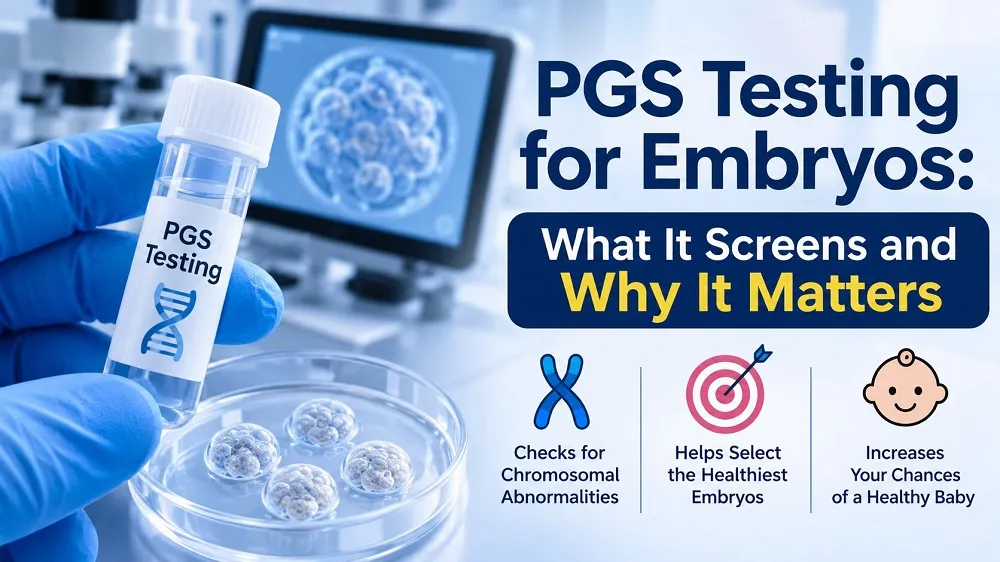
PGS Testing for Embryos: What It Screens and Why It Matters
Learn what PGS testing (PGT-A) screens for, how embryo biopsy works, what mosaic results mean, and the benefits and limitations before adding it to IVF.
When you're going through IVF, choosing which embryo to transfer can feel like one of the most important decisions in your fertility journey. Embryos may look similar under a microscope, but their chromosome makeup can differ.
This is one reason fertility specialists may discuss PGS testing, now commonly known as preimplantation genetic testing for aneuploidy (PGT-A). PGS testing examines embryos created through IVF for missing or extra chromosomes.
Understanding what the test screens for, how it works, and its limitations can help you decide whether it belongs in your treatment plan.
What Is PGS Testing for Embryos?
Preimplantation genetic screening (PGS) is the older term for preimplantation genetic testing for aneuploidy (PGT-A). It screens embryos created during IVF for abnormalities in chromosome number, such as an extra or missing chromosome.
Human cells typically contain 46 chromosomes arranged in 23 pairs. These chromosomes carry the genetic information needed for growth and development. When an embryo has too many or too few chromosomes, the condition is called aneuploidy.
Some chromosomal abnormalities can prevent an embryo from implanting. Others may lead to miscarriage or certain chromosomal conditions. PGT-A helps identify these abnormalities before an embryo is transferred, giving fertility specialists more information to consider when selecting embryos.
It's important to understand that PGT-A is a screening test, not a comprehensive genetic examination. It does not test for every inherited condition or guarantee that an embryo will develop into a healthy pregnancy.
What Does PGS Testing Screen For?
PGS testing primarily examines chromosome numbers to identify embryos with missing or extra chromosomes. This process can help distinguish between embryos with different chromosome results before transfer.
Missing or Extra Chromosomes
Aneuploidy occurs when an embryo has an abnormal number of chromosomes. For example, an embryo may have an extra copy of chromosome 21, which is associated with Down syndrome. Other chromosome abnormalities may affect implantation, embryo development, or the likelihood of miscarriage.
Chromosomally Normal Embryos
Embryos reported as euploid have the expected chromosome number based on the test. A euploid result can provide useful information when deciding which embryo to transfer.
Mosaic Embryos
Some embryos may contain a mixture of cells with different chromosome results. This is known as mosaicism. A mosaic result requires careful interpretation because PGT-A examines only a small sample of cells taken from the embryo's outer layer.
These cells may not represent the chromosome makeup of the entire embryo. As a result, mosaic findings do not always provide a complete picture of the embryo.
Patients should discuss mosaic findings with their fertility specialist and, when appropriate, a genetic counselor before making decisions about embryo transfer. The ASRM guidance on mosaic PGT-A results provides further information about these findings and their clinical interpretation.
How Is PGT-A Performed?
PGT-A is performed as part of an IVF cycle. The process involves collecting a small sample of cells from an embryo, testing that sample in a laboratory, and using the results to help guide transfer planning.
Embryo Biopsy
After eggs are retrieved and fertilized during IVF, the resulting embryos are monitored as they develop. Testing is generally performed when an embryo reaches the blastocyst stage, usually around day five or six.
An embryologist removes a small number of cells from the trophectoderm, the outer layer of the blastocyst. This procedure is called an embryo biopsy. The sample is sent to a specialized genetics laboratory for chromosome analysis.
Laboratory Testing
The laboratory examines the collected cells for missing or extra chromosomes. Techniques such as next-generation sequencing (NGS) may be used to analyze the sample and identify chromosome-number abnormalities.
The results may classify embryos as euploid, aneuploid, or mosaic. Sometimes, a result may be inconclusive and require further discussion with the fertility team.
Freezing and Transfer Planning
After biopsy, embryos are usually frozen while the laboratory analyzes the samples. This means patients generally have a frozen embryo transfer rather than an immediate fresh transfer during the same cycle.
Once the results are available, the fertility specialist reviews them alongside embryo development, grading, medical history, and other clinical factors. The findings help inform which embryos may be considered for transfer and whether additional genetic counseling is appropriate.
PGS vs. PGT-A: Is There a Difference?
PGS and PGT-A generally refer to the same type of chromosome screening, but the terminology has changed over time.
| Term | Meaning |
|---|---|
| PGS | Older term for preimplantation genetic screening |
| PGT-A | Current term for preimplantation genetic testing for aneuploidy |
| PGT-M | Testing for a specific inherited single-gene condition |
| PGT-SR | Testing for certain structural chromosome rearrangements |
If your clinic uses the term PGS, it may be referring to the same chromosome screening now called PGT-A. However, PGT-A is different from PGT-M and PGT-SR, which are designed to answer specific genetic questions.
Her Serenity offers embryo genetic testing (PGT), which is relevant for patients exploring chromosome screening and the role of genetic testing in their IVF treatment.
Why Does PGS Testing Matter?
PGS testing can offer additional information during IVF, particularly when patients have concerns about chromosome abnormalities or want to understand their embryo selection options.
It Can Help Guide Embryo Selection
When several embryos are available, chromosome screening may help fertility specialists prioritize embryos for transfer based on their results. This information can be considered alongside embryo morphology, developmental stage, and other clinical factors.
If you're trying to understand how embryos are evaluated even before genetic testing, embryo grading and what it means for IVF success explains how embryologists assess embryos based on their appearance and development.
Genetic screening and grading provide different types of information. Neither alone can predict with certainty which embryo will result in a live birth.
It May Help Reduce the Chance of Transferring an Aneuploid Embryo
An embryo with an abnormal chromosome number may fail to implant or may result in miscarriage. PGT-A can identify certain chromosome abnormalities before transfer, potentially helping avoid transfers of embryos with findings associated with poor outcomes.
However, the benefit of testing varies among patients. Screening may affect the likelihood of pregnancy or miscarriage per transfer in some situations without necessarily increasing the cumulative chance of having a baby from an entire IVF cycle.
It May Provide Additional Information for Patients With Certain Fertility Histories
Patients with advanced reproductive age, previous pregnancy losses, or unsuccessful IVF attempts may ask whether PGT-A could help them make more informed decisions.
Age is relevant because the likelihood of chromosome abnormalities in eggs and embryos generally increases as the age of the egg provider increases. But age alone does not determine whether testing is beneficial. The number of embryos available, previous treatment outcomes, and personal goals can also influence the discussion.
Does PGS Testing Improve IVF Success Rates?
PGS testing can improve embryo selection in certain clinical situations, but it doesn't consistently improve overall IVF success for every patient. Some studies suggest PGT-A may improve outcomes per embryo transfer or reduce miscarriage rates in selected populations.
However, the American Society for Reproductive Medicine's 2024 committee opinion notes that routine PGT-A use for all IVF patients has not been shown to provide an overall benefit, and some randomized trials have found similar overall outcomes compared with conventional IVF.
This distinction matters because a higher success rate per transfer doesn't necessarily mean a greater cumulative chance of live birth after considering all embryos and transfers from a cycle. You can review the ASRM's 2024 committee opinion on PGT-A for more information about the evidence and limitations of routine testing.
For a more complete picture of the factors that affect transfer outcomes, read our guide to fresh vs. frozen embryo transfer success rates. Embryo testing may influence transfer timing, but a tested embryo doesn't automatically make a frozen transfer more successful than a fresh one.
What Are the Limitations and Risks of PGS Testing?
Although PGT-A provides useful chromosome information, it has limitations that patients should understand before deciding to proceed.
- It isn't a guarantee: A euploid result doesn't ensure implantation, ongoing pregnancy, or live birth.
- It doesn't screen for every genetic condition: PGT-A primarily evaluates chromosome number and certain chromosome changes. It doesn't replace specific testing for inherited single-gene disorders.
- Biopsy carries potential risks: Removing cells from an embryo may cause damage, although biopsy is routinely performed in appropriately equipped laboratories.
- Results may be inconclusive: Some biopsies don't produce a clear result, and mosaic findings can complicate interpretation.
- Some embryos may not be available for transfer: Testing may identify no embryos with results suitable for transfer in a given cycle.
- It adds cost: PGT-A may involve separate biopsy, laboratory testing, embryo storage, and transfer expenses.
What Should You Ask Your Fertility Specialist Before PGS Testing?
Before adding chromosome screening to your IVF plan, consider asking:
- What specific information will PGT-A provide in my situation?
- Is testing recommended based on my medical history, or is it optional?
- How could the results change my embryo transfer plan?
- What happens if my results are mosaic or inconclusive?
- What are the chances of having no embryos suitable for transfer?
- How much does testing cost beyond the standard IVF cycle?
- Would testing change my cumulative chance of live birth?
- What are my options if I decide not to test my embryos?
- Is genetic counseling available to help interpret complex results?
These questions can help you understand the purpose of testing rather than viewing it as a routine step in every IVF cycle.
Making an Informed Decision About Embryo Testing
PGS, now known as PGT-A, offers a way to screen IVF embryos for certain chromosome abnormalities before transfer. It can provide valuable information to support embryo selection, but its results need to be interpreted carefully, particularly when mosaic or inconclusive findings are reported.
At Her Serenity, you can discuss whether PGT-A could change your treatment plan, how different results may affect embryo transfer decisions, and what testing is likely to cost. A consultation can also help you understand the limitations of screening and whether additional genetic counseling may be appropriate.